
Hits: 80
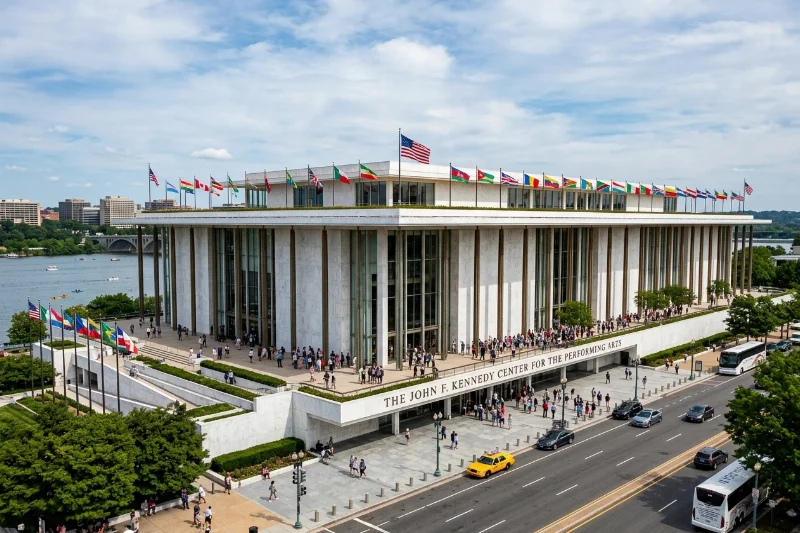
In a decision that has sent shockwaves through both the legal and political landscapes of Washington, a federal district judge has issued a formal order requiring the removal of Donald Trump’s name from all prominent branding associated with the John F. Kennedy Center for the Performing Arts. The ruling follows months of litigation concerning the intersection of private donor recognition and the preservation of federal cultural landmarks. Observers state that this marks a significant shift in how the courts handle naming rights within government-funded institutions.
The Scope of the Judicial Mandate
Judge Meredith Thorne, who presided over the case, argued that the continued inclusion of the former President’s name in certain areas of the facility violated the original charter of the institution. According to the court, the Kennedy Center’s status as a living memorial to the 35th president necessitates a degree of neutrality that the current branding purportedly compromised. The judge’s order requires that all physical signage bearing the Trump name be dismantled within thirty days, pending any immediate stay from higher courts.
The Legal Basis for Branding Removal
At the heart of the legal dispute is a complex interpretation of the John F. Kennedy Center Act, which governs how the facility may accept and display private recognition. The court found that while donor acknowledgments are standard, the scale and placement of the Trump-specific signage exceeded the bounds of traditional philanthropic credit. Judge Thorne noted that the public perception of a federal memorial must remain untethered from contemporary partisan figures to maintain its historical integrity.
The litigation was initially sparked by a coalition of historical preservationists and former board members who argued that the aesthetic changes made during the previous administration were inconsistent with the center’s mission. They contended that the branding functioned less as a donor thank-you and more as a permanent political marker. This argument resonated with the court, which emphasized the public trust held by the Smithsonian-affiliated institution.
Defense Arguments and the Appeal Process
Attorneys representing Donald Trump’s interests have reacted with swift condemnation of the ruling, calling it a politically motivated attempt to erase his legacy. They argued in court that the naming rights were part of a valid agreement tied to substantial contributions and renovations facilitated during his tenure. The defense team maintains that the removal of the name constitutes a breach of contract and a violation of established precedents regarding philanthropic recognition in public spaces.
Legal experts suggest that an appeal to the D.C. Circuit Court of Appeals is inevitable. The Trump legal team has already filed a notice of intent to seek an emergency stay, which would pause the removal of the signage while the appellate process unfolds. Should the stay be granted, the physical branding will remain in place for the foreseeable future as the case moves through the higher levels of the judiciary.
Impact on Cultural Institutions and Public Trust
The implications of this ruling extend far beyond the marble walls of the Kennedy Center. It sets a potential precedent for how other federal institutions, such as the Smithsonian museums or the National Parks Service, manage naming rights for high-profile political figures. Cultural historians suggest that the decision reinforces the idea that national monuments and memorials are intended to transcend the specific personalities of those who hold temporary office, focusing instead on the office itself.
Inside the Kennedy Center, administrators have expressed a desire for a swift resolution to the matter to avoid further distractions from their artistic programming. While the center has not taken a public stance on the merits of the naming rights, they have indicated they will comply with all final court orders. The staff remains focused on upcoming performances, even as the building becomes a flashpoint for a larger national debate over history and memory.
Political Polarization and Public Reaction
Public reaction to Judge Thorne’s decision has been predictably split along partisan lines. Supporters of the ruling view it as a necessary step in restoring the non-partisan dignity of Washington’s premier performing arts venue. They argue that the Kennedy Center should remain a space where all Americans can gather without being reminded of the country’s current political fractures. Conversely, critics argue that the ruling is an example of judicial overreach and an attempt to marginalize a former president’s contributions.
As the legal battle continues, the physical appearance of the Kennedy Center remains unchanged for the moment. However, the shadow of the court’s decision looms large over the institution. Whether the Trump name remains a part of the center’s architecture or is scrubbed away, the debate it has triggered regarding the intersection of politics, art, and public space will likely persist for years to come.
