
Hits: 123
Back in 1969, the entire world stood still, glued to grainy black-and-white television sets, watching a man hop around on a giant dusty marble. It was the ultimate ‘we did it’ moment for humanity. Fast forward to today, and we are more likely to be glued to our phones watching cat videos than tracking lunar trajectories. With billionaires launching sports cars into orbit and rovers chilling on Mars, it is easy to wonder if the Moon has lost its luster. Does a trip to our closest neighbor even count as a flex anymore, or is it just the cosmic equivalent of a trip to the local grocery store?
The Moon’s Mid-Life Crisis
For a few decades, the Moon felt like that one high school trophy sitting in a dusty basement—impressive once, but mostly forgotten. After the Apollo missions, we kind of checked the ‘Visit Moon’ box and moved on to other things, like the internet and microwave popcorn. The novelty wore off because the Moon didn’t seem to offer anything new. It was just rocks, silence, and a distinct lack of atmosphere. However, as it turns out, the Moon wasn’t finished with us; it was just waiting for its big Hollywood-style comeback tour.
From Grainy TV to 4K TikToks
The magic is returning, but this time it is in high definition. We are no longer satisfied with blurry photos; we want 4K streams of lunar craters and high-speed lunar rover races. The shift from state-sponsored pride to private-sector innovation has given the Moon a serious glow-up. When we go back now, it isn’t just about planting a flag and leaving some footprints. It is about sharing the experience with a global audience in real-time, making the lunar surface feel like a neighborhood we might actually visit one day.
The Ultimate Cosmic Gas Station
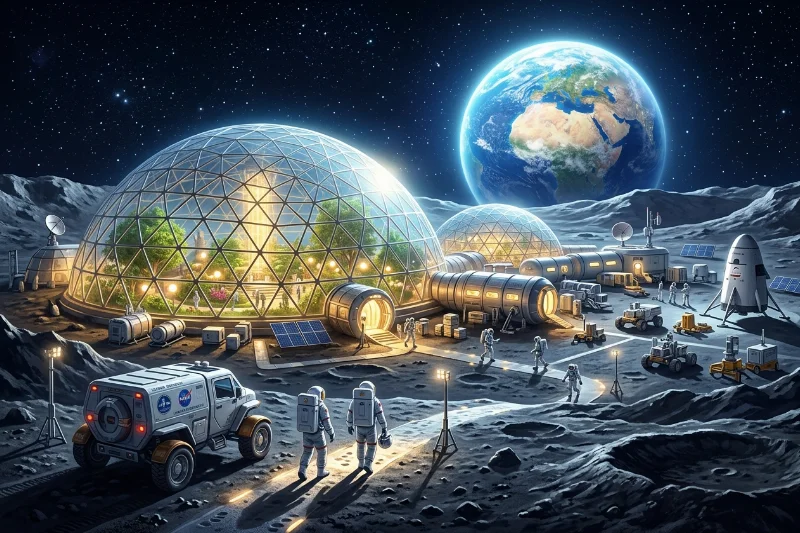
One major reason the Moon is trending again is that we have stopped seeing it as a destination and started seeing it as a launchpad. If we want to get to Mars, we need a place to practice and refuel. Think of the Moon as the ultimate cosmic gas station and rest stop. It is a testing ground for technologies that will keep humans alive in deep space. Learning how to extract water from lunar ice or build 3D-printed habitats out of Moon dust isn’t just cool science—it is the blueprint for becoming a multi-planetary species.
Mining for Moonlight
Beyond being a pit stop, the Moon is actually packed with resources that could change life on Earth. Helium-3, rare earth metals, and even just the potential for solar power collection are drawing the eyes of entrepreneurs. This ‘lunar gold rush’ adds a layer of practical value that the original space race lacked. Suddenly, going to the Moon isn’t just for the ‘vibes’; it is a serious economic frontier that could power our tech-heavy future for centuries to come.
The New Players in the Game
The guest list for the Moon has also expanded significantly. It is no longer a two-player game between the US and the Soviet Union. Now, countries like India, China, and Japan are landing their own tech, while private companies like SpaceX and Blue Origin are building the elevators. This competition breeds creativity and, more importantly, it makes space exploration feel more like a collective human endeavor. The more people and robots we send up there, the more the Moon starts to feel like a part of our expanded backyard.
Lunar Tourism is Reaching the Horizon
We are creeping closer to the day when ‘vacationing on the Moon’ isn’t just a sci-fi trope. While a ticket might currently cost more than a small island, the long-term goal is to make space accessible. Imagine a future where you can book a weekend at a lunar hotel to watch the Earth rise over the horizon. Even if most of us never go, the fact that it is a possibility changes our perspective on what it means to be a human living in the 21st century.
So, does going to the Moon still mean anything? Absolutely. It might not have the same ‘first-time’ shock value it did in 1969, but its significance has evolved from a symbolic victory to a practical necessity. We aren’t just going back to prove we can; we are going back to stay, to learn, and to prepare for the next big leap. The Moon is no longer just a light in the sky; it is the front door to the rest of the universe, and we are finally turning the key.
