Hits: 104
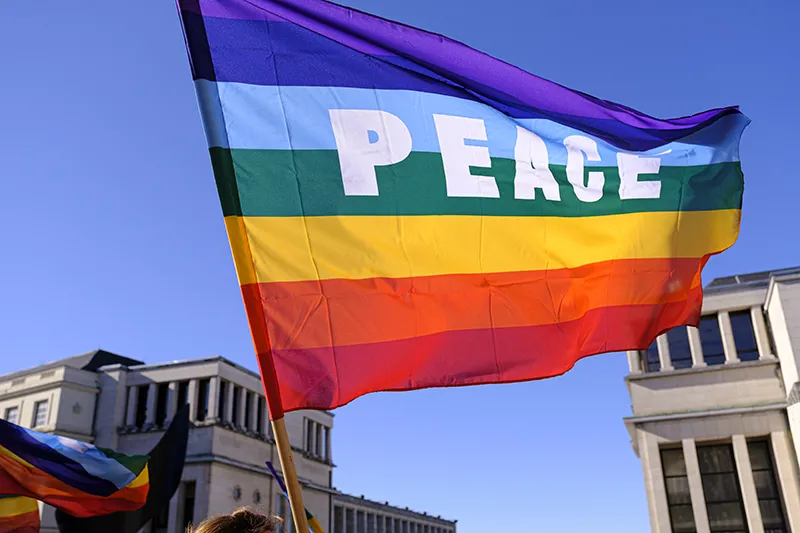
In an era defined by rapid-fire technological shifts and increasingly polarized social landscapes, a question first posed by songwriter Nick Lowe in 1974 feels more urgent than ever: “What’s so funny about peace, love, and understanding?” While the song became a global anthem through Elvis Costello’s raw, urgent delivery, its core query has transcended the charts to become a litmus test for our collective humanity in the 21st century.
The original hippie movement of the 1960s is often dismissed as a naive experiment in patchouli and flower power, yet its fundamental tenets are currently undergoing a sophisticated renaissance. Far from being a relic of the past, the hippie dream is morphing into a resilient framework for surviving the modern age, proving that the search for harmony is far from a laughing matter.
The Resonance of a Question
To understand why this sentiment persists, one must look at the cycle of cultural cynicism that often greets idealistic movements. In the decades following the Summer of Love, the narrative shifted toward corporate ambition and individualist pursuits, leaving the communal spirit of the 60s to be parodied in media. However, the irony that once fueled these parodies is beginning to wear thin as younger generations face global challenges that require exactly the kind of cooperation the hippies championed.
From Nick Lowe to Global Anthem
When Lowe wrote the track, he was observing the dissolution of the 60s optimism into the gritty reality of the 70s. The song wasn’t just a plea; it was a defense of sanity. Today, that defense is being taken up by a new cohort of activists and thinkers who recognize that without a foundational commitment to peace and understanding, the structures of modern society remain precarious at best.
Why the Dream Refuses to Die
The survival of the hippie dream isn’t merely about nostalgia; it is about necessity. In a world grappling with climate change and social inequality, the “back-to-the-land” ethos of the past has evolved into a modern sustainability movement. This isn’t just about wearing tie-dye; it’s about regenerative agriculture, ethical consumption, and a refusal to participate in the dehumanizing aspects of late-stage capitalism.
Furthermore, the rejection of traditional hierarchies—a hallmark of the original counterculture—is seeing a resurgence through decentralized organizations and grassroots community building. The desire to live outside of the rigid expectations of the status quo remains a powerful motivator for those seeking a more authentic existence.
Eco-Consciousness as the New Activism
The modern “hippie” is likely to be found in an urban garden or advocating for renewable energy rather than just hitchhiking across the country. This evolution of the dream has grounded the movement in science and tangible outcomes, making the pursuit of a peaceful planet a pragmatic goal rather than just a psychedelic vision. Environmentalism is the physical manifestation of “love” for the earth.
The Digital Commune
Technology has, ironically, provided the tools for the new hippie dream to flourish. Digital nomadism allows individuals to escape the corporate cubicle and find community in shared values rather than shared geography. Online platforms facilitate the exchange of ideas on minimalism, intentional living, and mutual aid, creating a global village that the original communards could only have imagined.
Navigating a Cynical World
Critics often argue that peace and love are “soft” concepts, unable to stand up to the harsh realities of geopolitics. Yet, there is a growing realization that the “hard” approaches of the past century have often led to cycles of conflict and exhaustion. The resurgence of these values is a sophisticated response to the burnout of a high-pressure, high-conflict society.
In this context, understanding is not just a passive state but an active, radical choice to engage with the “other.” In a fragmented media landscape, the effort to find common ground is perhaps the most revolutionary act one can perform. It requires a level of emotional intelligence and resilience that far exceeds the simplicity of anger or dismissiveness.
Wellness and Inner Peace
The mainstreaming of mindfulness and meditation is another clear branch of the hippie tree. Once viewed as fringe practices, these tools for finding inner peace are now recognized by the medical community as essential for mental health. By prioritizing the internal landscape, the modern individual is reclaiming the right to a peaceful mind in a chaotic world.
Ultimately, the hippie dream survives because it addresses a fundamental human longing for connection. Whether through the lens of history or the urgency of the present, the quest for peace, love, and understanding remains the most courageous path available. As the song suggests, there is nothing funny about it; in fact, it might be the only thing that saves us.