
Hits: 82
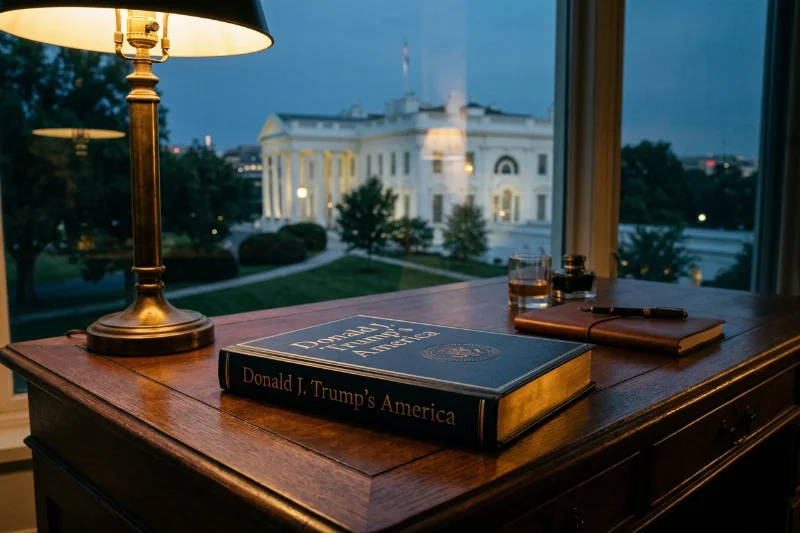
The publication of Donald J. Trump’s America marks a significant moment in the intersection of political memoir and campaign literature, serving as a comprehensive collection of the former president’s perspectives. It articulates a vision that oscillates between nostalgic patriotism and modern populist fervor, offering a direct window into the narrative style that defined a presidency. For readers and analysts alike, the work provides a primary source for understanding the communication strategies that reshaped the American political landscape.
Distributed widely across digital and physical platforms, the work targets a base of supporters who view Trump as the singular architect of a renewed national spirit. The prose is distinct, mirroring the energetic and often combative speech patterns that have become his political signature. It is less a traditional biography and more a thematic guide to a unique brand of nationalism that continues to influence the Republican party today.
The Narrative of Self-Celebration
Within the chapters, there is an unmistakable emphasis on individual achievement as a surrogate for national progress, a theme that critics have frequently scrutinized. This approach is often described as a narcissist’s dream, where the boundary between the leader’s personal success and the state’s welfare becomes intentionally blurred. Every policy success cited is framed through the lens of personal negotiation and the strength of individual will.
This psychological framing is not merely a byproduct of the writing but appears to be the central pillar of the book’s message. By positioning the author as the sole protagonist in a high-stakes drama of American decline and rebirth, the text invites a level of devotion that is rare in contemporary politics. It creates a closed loop of validation for those already within the movement, reinforcing the idea that the leader’s persona is inseparable from the nation’s identity.
Rhetorical Flourishes and Branding
The language employed throughout the volume is saturated with superlatives and absolute declarations, a hallmark of the established Trumpian brand. This rhetorical strategy serves to simplify complex geopolitical issues into digestible victories and defeats, ensuring the message remains accessible to a broad audience. It reinforces a binary worldview that has proven highly effective in mobilizing a dedicated and loyal electorate.
Furthermore, the visual presentation—ranging from the choice of typography to the selection of high-intensity photographs—complements the text’s assertion of dominance. The book acts as a physical extension of the Trump brand, designed to occupy space in the homes of his followers as a totem of perceived power. It is a calculated exercise in image management that prioritizes aesthetics and impact over nuanced policy debate.
Media reception of the work has followed predictable partisan lines, reflecting the deep divisions within the American public. Supporters praise the book for its clarity and boldness, seeing it as a courageous stand against a hostile establishment. Conversely, critics point to the lack of introspection and the selective memory regarding controversial events as evidence of a narrative designed to shield the author from accountability.
Analyzing the America First Vision
Moving beyond the personal, the book attempts to codify the America First philosophy into a lasting political doctrine that can survive beyond a single administration. It revisits trade agreements, foreign policy shifts, and border security measures with a focus on how these actions disrupted the status quo for the perceived benefit of the worker. The narrative portrays the globalist establishment as a monolith that only a disruptive outsider could hope to dismantle.
This disruption is presented as a necessary shock to a system that the author claims has long ignored the needs of the average citizen. By framing policy as a series of battles won against a shadowy elite, the book maintains a sense of urgency and conflict. It suggests that the work of reclaiming the country is an ongoing struggle that requires the same aggressive tactics used during his four years in office.
Policy as Personal Legacy
In examining his legislative and executive record, Trump focuses on the symbolic weight of his decisions rather than the granular details of implementation. This approach allows the narrative to maintain a high-stakes emotional resonance, keeping the reader engaged in the drama of his personal vision. The legacy described is one of defiance against globalist trends and a return to traditional concepts of sovereignty and strength.
International observers have noted that the book’s themes reflect a broader global trend toward nationalism and the rise of strongman-style leadership. The emphasis on personal loyalty and the rejection of multilateralism are themes that resonate with similar movements in Europe and South America. As such, the book is not just a domestic artifact but a piece of a larger global puzzle regarding the future of democracy.
Ultimately, Donald J. Trump’s America serves as both a historical artifact and a living manifesto for a specific segment of the American public. Its legacy remains tied to the polarizing figure at its center, ensuring that debate over its contents will persist for years to come. Whether viewed as a visionary work of leadership or a narcissistic exercise in self-mythology, its influence on the current political discourse is undeniable and profound.
