Hits: 21
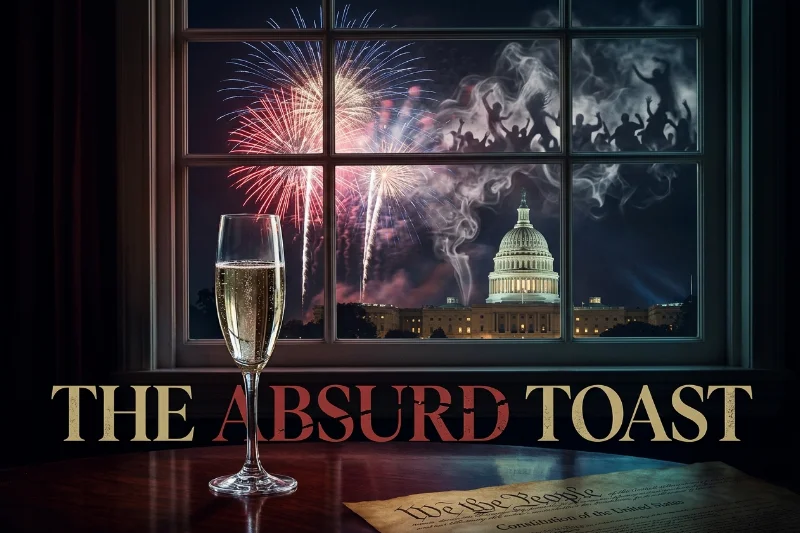
As we descend once more into the annual ritual of processed meats and pyrotechnics, the olfactory signature of charcoal smoke serves as a Pavlovian trigger for a particular brand of national amnesia. It is a curious phenomenon, this collective insistence on celebrating the birth of a republic while studiously ignoring the recent, somewhat uncoordinated attempts to provide it with a premature autopsy. As I sit here, nursing a vintage of questionable provenance, I find the explosions in the sky remarkably reminiscent of the televised detonations of our democratic norms that transpired not so long ago in the very city I once called my legislative playground.
The Choreography of Civic Dissonance
To the uninitiated, the juxtaposition of the Fourth of July and January 6th might seem like a jarring cognitive dissonance. To those of us who have spent years navigating the labyrinthine corridors of the Rayburn Building, however, they are merely two sides of the same debased currency. One is the official hagiography, polished to a high sheen by a thousand press secretaries; the other is the director’s cut, raw, unedited, and deeply revealing of the cast’s underlying anxieties. We are a nation that loves a good show, provided the pyrotechnics remain safely atmospheric and the protagonist is clearly defined by his polling data.
The irony is, of course, that both events are fundamentally about the aesthetics of power. The Fourth is a curated exhibit of institutional stability, a day where the political class drapes itself in the flag to mask the smell of administrative decay. January 6th was the moment the mask slipped, revealing not a coherent revolutionary force, but a desperate ensemble of actors who had internalized the very performative nihilism that the elite have been peddling for decades. It was the day the theater of the absurd finally abandoned the stage and decided to occupy the audience’s seats.
The Architectural Frailty of the Hegemon
In my tenure as a strategist, I often observed that the structural integrity of a republic relies less on its constitution than on the collective willingness of its citizens to pretend the rules actually matter. Legitimacy is a fragile artifice, a shared hallucination that can be dispelled by a single, sufficiently vulgar gesture. When the mob breached the Capitol, they didn’t just break windows; they shattered the illusion that the grandiosity of the architecture was anything more than a stage set for a particularly expensive long-running soap opera.
We are witnessing a historical echo that would make the Gracchi brothers wince in recognition. The Roman Republic did not collapse because of a single riot, but because the elite lost the ability to distinguish between governance and gladiatorial games. Today, we find ourselves in a similar predicament, where the legislative process has been entirely subsumed by the demands of the twenty-four-hour news cycle. The 4th of July serves as a convenient intermission, a time to replenish the popcorn before the next act of our slow-motion disintegration begins.
Modern partisanship is no longer a contest of ideas, but a competition in brand management. The events of January 6th were, in many ways, the ultimate focus-grouped insurrection. It had the visual language of a blockbuster film—the costumes, the villains, the dramatic tension—designed to elicit maximum engagement from a public that has forgotten the difference between a policy debate and a reality television finale. To remember that day on the Fourth is to acknowledge the hollowness of the celebration.
The Aesthetics of the Unreal
There is a specific quality to the light in Washington during the summer, a hazy, oppressive heat that tends to liquefy one’s sense of reality. It is in this atmosphere that the commodification of outrage thrives. We have turned our political trauma into a lucrative industry, with both sides of the aisle mining the events of January 6th for fundraising emails and campaign ads, all while the fundamental issues of systemic instability remain as unaddressed as a freshman senator’s first floor speech.
The costume drama of D.C. politics is never more apparent than when the political elite attempt to sanitize the narrative. They speak of “defending democracy” with the same practiced gravity they use to describe a highway appropriation bill. It is a grandiloquent performance, meant to reassure the populace that the adults are still in the room, even as the walls are being redecorated with the graffiti of populist discontent. The Fourth of July is the gala premiere for this ongoing deception.
I find it fascinating how we’ve managed to package the visceral terror of a mob and the patriotic fervor of a parade into the same cultural product. We consume them with the same detached interest, scrolling through the images on our devices as if they were merely different genres of content. This is the ultimate victory of the performative state: the transformation of history into a series of curated moments, scrubbed of their actual significance and served as a side dish to our holiday festivities.
A Toast to the Sublimely Absurd
The futility of the subsequent legislative “fixes” is perhaps the most Julian Vance-approved aspect of this entire saga. Watching Congress attempt to legislate against future insurrections is like watching a pyromaniac draft fire safety codes. They are so deeply embedded in the system of incentives that created the crisis that their only solution is to build a slightly higher fence around the same failing institution. It is a triumph of bureaucratic optimism over historical reality.
Intellectual disillusionment is a quiet, persistent companion in my current line of work. Once you have seen the pulleys and levers behind the curtain, the grand speeches of the Fourth of July sound less like inspiring oratory and more like the sound of a dying engine coughing its last. We celebrate an independence won from a distant king, while remaining blissfully indifferent to the new lords of the lobby and the masters of the algorithm who currently hold the keys to the kingdom.
The 4th of July has become a hollow shell of intent, a vessel for a brand of nationalism that is more concerned with the volume of its expression than the depth of its conviction. It is the perfect day to remember January 6th, because both represent the triumph of the visceral over the cerebral, the spectacle over the substance. We are a nation in love with the firework, indifferent to the structural damage caused by the blast.
If our founding fathers were to observe the current state of the Union, I suspect they would spend less time debating the Bill of Rights and more time looking for the exit. They were men of the Enlightenment, and what we are witnessing is a slow descent into a post-rational age. The actors have changed, the costumes are far less elegant, but the fundamental drive toward self-immolation remains a constant in the human political experiment.
So, as the sky ignites this evening, I shall raise a glass to the absurdity of it all. I shall remember the day the republic trembled, not because it was an exceptional tragedy, but because it was the most honest moment in our modern history. It was the day we finally stopped pretending that the theater was real. Happy Independence Day, fellow citizens; do try not to burn the house down while celebrating its theoretical foundations.
